Quantum computing represents the next frontier in computational power, promising to solve problems that are currently intractable for classical computers. By 2025, quantum technologies are expected to begin transforming software development across multiple industries, from drug discovery to financial modeling.
Key Insight: While universal fault-tolerant quantum computers are still years away, hybrid quantum-classical algorithms are already delivering practical advantages in optimization, machine learning, and simulation problems.
Table of Contents
Quantum Computing Fundamentals

Unlike classical computers that use bits (0 or 1), quantum computers use quantum bits or qubits that can exist in superposition states, enabling exponential parallelism for certain computational tasks.
Core Quantum Principles
Quantum computing operates on three fundamental principles:
- Superposition: Qubits can represent both 0 and 1 simultaneously, enabling parallel computation
- Entanglement: Qubits can be correlated in ways that classical bits cannot, enabling complex computations
- Interference: Quantum states can constructively or destructively interfere, amplifying correct answers
Quantum vs Classical Computing
While classical computers excel at sequential processing and everyday tasks, quantum computers show promise for:
- Factorization of large numbers (Shor's algorithm)
- Database search (Grover's algorithm)
- Quantum simulation of molecular systems
- Optimization problems across multiple variables
Industry Insight: Major tech companies including IBM, Google, Microsoft, and Amazon are investing billions in quantum computing research and development, with cloud-accessible quantum processors already available to researchers and developers.
Revolutionary Quantum Algorithms

Quantum algorithms leverage the unique properties of quantum mechanics to solve specific problems exponentially faster than their classical counterparts.
Shor's Algorithm
This revolutionary algorithm can factor large numbers exponentially faster than classical methods, with profound implications for cryptography and cybersecurity.
def shors_algorithm(N):
# Initialize quantum registers
qreg = QuantumRegister(2*n)
creg = ClassicalRegister(n)
qc = QuantumCircuit(qreg, creg)
# Apply Hadamard gates for superposition
for i in range(n):
qc.h(qreg[i])
# Apply modular exponentiation
qc.append(modular_exponentiation(...))
# Apply quantum Fourier transform
qc.append(qft(...))
return qc
Grover's Algorithm
Provides quadratic speedup for unstructured search problems, with applications in database search, optimization, and machine learning.
Quantum Machine Learning
Quantum versions of classical machine learning algorithms are showing promise for:
- Quantum support vector machines
- Quantum neural networks
- Quantum principal component analysis
- Quantum generative adversarial networks
Quantum Programming Languages & Frameworks
A new ecosystem of quantum programming languages and frameworks is emerging to make quantum computing accessible to software developers.
Qiskit (IBM)
An open-source framework for working with quantum computers at the level of circuits, pulses, and algorithms.
from qiskit import QuantumCircuit, transpile
from qiskit_aer import AerSimulator
from qiskit.visualization import plot_histogram
# Create quantum circuit with 2 qubits
qc = QuantumCircuit(2, 2)
# Apply quantum gates
qc.h(0) # Hadamard gate
qc.cx(0, 1) # CNOT gate
qc.measure([0,1], [0,1])
# Execute on simulator
simulator = AerSimulator()
compiled_circuit = transpile(qc, simulator)
job = simulator.run(compiled_circuit, shots=1000)
result = job.result()
counts = result.get_counts(qc)
Other Major Frameworks
- Cirq (Google): Python framework for creating, editing, and invoking Noisy Intermediate Scale Quantum (NISQ) circuits
- Q# (Microsoft): Domain-specific programming language used for expressing quantum algorithms
- PennyLane: Cross-platform Python library for differentiable programming of quantum computers
- Forest (Rigetti): Full-stack programming and execution environment for quantum/classical computing
Development Tip: Most quantum programming frameworks integrate seamlessly with classical machine learning libraries like TensorFlow and PyTorch, enabling hybrid quantum-classical model development.
Hybrid Quantum-Classical Computing
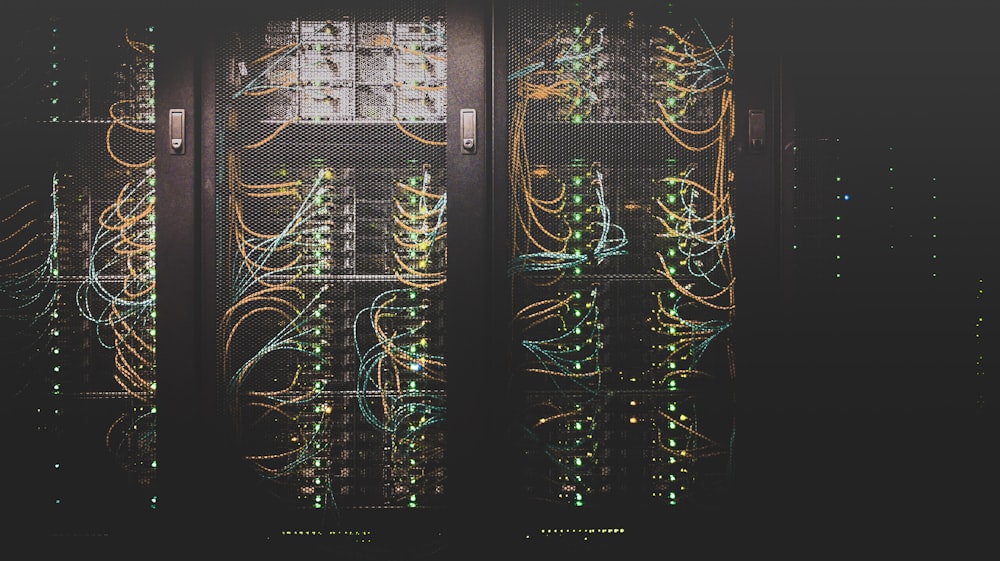
Given the current limitations of quantum hardware, hybrid approaches that combine classical and quantum computing are proving most practical for near-term applications.
Variational Quantum Algorithms
These algorithms use a quantum computer to prepare and measure quantum states, while a classical optimizer adjusts parameters to minimize a cost function.
Quantum Approximate Optimization Algorithm (QAOA)
A hybrid algorithm for solving combinatorial optimization problems with applications in:
- Logistics and supply chain optimization
- Financial portfolio optimization
- Drug discovery and molecular modeling
- Machine learning feature selection
Quantum Machine Learning Pipelines
Modern quantum ML workflows typically involve:
- Classical data preprocessing and feature engineering
- Quantum feature mapping and circuit execution
- Classical post-processing and model evaluation
- Hybrid optimization of quantum and classical parameters
Industry Applications & Use Cases
Quantum computing is finding practical applications across multiple industries, with early adopters already seeing benefits.
Pharmaceuticals & Healthcare
Quantum computers can simulate molecular interactions at an unprecedented scale, accelerating:
- Drug discovery and development
- Protein folding simulations
- Personalized medicine approaches
- Chemical reaction optimization
Finance & Banking
Financial institutions are exploring quantum computing for:
- Portfolio optimization and risk analysis
- Fraud detection and cybersecurity
- Option pricing and derivative valuation
- Algorithmic trading strategies
Logistics & Supply Chain
Quantum optimization algorithms can solve complex routing and scheduling problems:
- Vehicle routing with multiple constraints
- Inventory optimization across global networks
- Supply chain risk management
- Production scheduling and resource allocation
Case Study: Volkswagen partnered with quantum computing company D-Wave to develop a quantum-powered traffic management system that reduced travel times by 15% in Lisbon during a pilot project, demonstrating real-world quantum advantage.
Quantum Developer Skills for 2025
As quantum computing matures, developers need to acquire new skills to work effectively in this emerging field.
Essential Technical Skills
Quantum developers should focus on:
- Linear algebra and complex numbers: Fundamental mathematics of quantum mechanics
- Quantum information theory: Understanding qubits, entanglement, and quantum gates
- Quantum programming frameworks: Qiskit, Cirq, or Q# proficiency
- Classical-quantum integration: Building hybrid applications
- Quantum algorithm design: Understanding when and how to apply quantum advantage
Domain Knowledge Areas
Specialized knowledge in application domains enhances quantum development:
- Computational chemistry and molecular modeling
- Financial mathematics and quantitative analysis
- Optimization theory and operations research
- Machine learning and artificial intelligence
- Cryptography and cybersecurity
Implementation Roadmap for Organizations

Organizations should take a phased approach to quantum computing adoption to maximize ROI and minimize risk.
Phase 1: Education & Awareness (3-6 months)
- Conduct quantum computing literacy training for technical teams
- Identify potential use cases within the organization
- Establish relationships with quantum computing vendors and researchers
- Allocate budget for proof-of-concept projects
Phase 2: Experimentation & Pilots (6-12 months)
- Launch small-scale pilot projects addressing specific business problems
- Develop hybrid quantum-classical prototypes
- Build internal quantum development capabilities
- Establish metrics for measuring quantum advantage
Phase 3: Integration & Scaling (12-24 months)
- Integrate quantum solutions into production workflows
- Scale successful quantum applications across the organization
- Develop quantum-ready data infrastructure
- Establish centers of excellence for quantum computing
Strategic Advice: Focus on problems where quantum computing provides clear advantage over classical approaches, rather than attempting to replace existing classical systems. Start with optimization, simulation, or machine learning applications that align with your core business challenges.
Conclusion
Quantum computing represents a paradigm shift in computational capability that will fundamentally transform software development over the coming decade. While universal fault-tolerant quantum computers remain on the horizon, practical quantum advantage is already being demonstrated in specific domains through hybrid approaches.
The organizations that begin building quantum capabilities today will be best positioned to leverage this transformative technology as it matures. By focusing on education, strategic experimentation, and hybrid implementation, businesses can navigate the quantum computing landscape effectively.
Final Thought: Quantum computing is not just about faster computation—it's about solving previously intractable problems and enabling entirely new approaches to scientific discovery, business optimization, and technological innovation. The quantum future is being built today by forward-thinking developers and organizations.
Frequently Asked Questions
When will quantum computers replace classical computers?
Quantum computers are not expected to replace classical computers entirely. Instead, we'll see a hybrid future where quantum computers handle specific tasks (optimization, simulation, factorization) while classical computers continue to power everyday computing needs. The transition will be gradual over the next 10-20 years.
How difficult is it to learn quantum programming?
While quantum computing requires understanding new concepts like superposition and entanglement, modern quantum programming frameworks have made it increasingly accessible to classical programmers. Developers with strong mathematics backgrounds (linear algebra, probability) typically find the transition smoother. Many resources and courses are now available for skill development.
What are the current limitations of quantum computing?
Current quantum computers face several challenges including qubit decoherence (limited computation time), error rates that require error correction, scalability issues, and the need for extreme cooling. These limitations are the focus of ongoing research, with steady progress being made each year.
Should my organization invest in quantum computing now?
Organizations should begin exploring quantum computing now through education, pilot projects, and partnerships. While widespread quantum advantage is still emerging, early adopters will develop valuable expertise and be better positioned to leverage quantum technologies as they mature. The investment should be proportional to your industry's potential quantum benefit.
Comments (3)
Excellent overview of the quantum computing landscape. The hybrid approach section is particularly relevant for organizations looking to get started. We've been experimenting with Qiskit for financial portfolio optimization and the early results are promising, though the learning curve is significant.

Dr. Anika Patel
As a researcher in computational chemistry, I appreciate the balanced perspective on current capabilities versus hype. The pharmaceutical applications are real - we're already seeing 10-20% improvements in molecular simulation accuracy using hybrid quantum-classical approaches, though true quantum advantage is still limited to small molecules.

Carlos Rodriguez
The implementation roadmap is exactly what our organization needs. We've been struggling with where to start with quantum computing. The phased approach makes sense - we'll begin with education and identifying use cases before committing significant resources.
Marcus Thompson